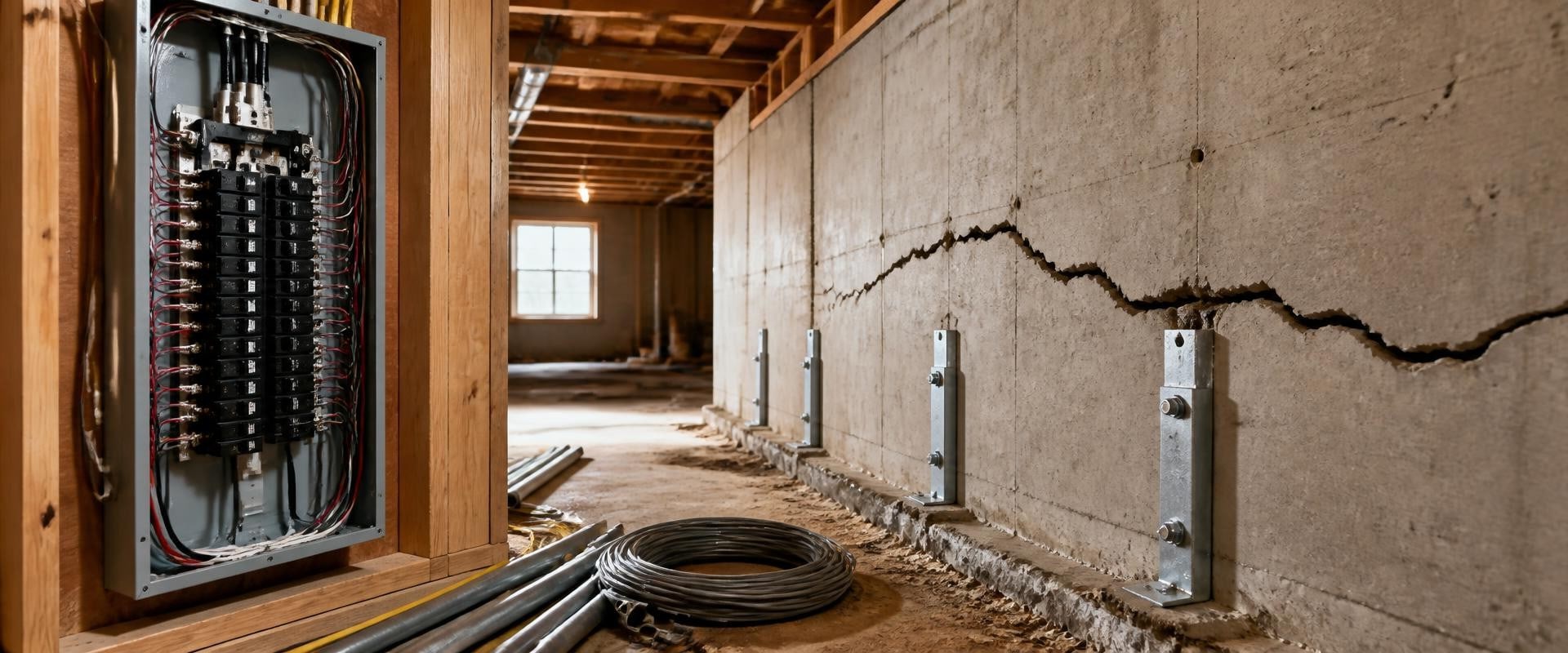
Major electrical upgrades can improve the safety, capacity, and functionality of a home, but they may be more effective when underlying structural problems are addressed first. Foundation movement can affect walls, floors, ceilings, and other areas where electrical wiring and equipment are installed. If a property has noticeable settlement, cracks, or uneven surfaces, completing extensive electrical work before stabilizing the structure could create complications later. New wiring, panels, conduits, and fixtures may need adjustment if portions of the building continue to shift.
Evaluate Foundation Problems Before Opening Walls
Electrical renovations often require access to walls, ceilings, crawl spaces, or other concealed areas. These projects may involve replacing outdated wiring, installing new circuits, upgrading the electrical panel, or adding outlets and lighting. If foundation repairs are also necessary, it may be more practical to determine the structural repair plan before closing walls or installing new finishes. Professionals such as Bats Foundation Repair can evaluate whether movement should be addressed before electricians begin major upgrades in areas affected by settlement.
Protect New Wiring From Structural Stress
Electrical wiring needs to remain properly supported and protected inside a building. When structural components shift, cables running through studs, joists, or other framing can experience tension or changes in position. Conduit may also become misaligned where it crosses sections of the structure that are moving differently. Stabilizing the foundation before installing extensive new electrical infrastructure can provide electricians with a more consistent framework for routing and securing wiring.
Consider the Main Electrical Panel
The electrical panel is a critical part of any major electrical upgrade. If it is mounted on a wall that has experienced significant movement, electricians should verify that the surrounding structure is stable before replacing or expanding the panel. Foundation repairs may involve controlled lifting or adjustments that slightly change the alignment of walls. Completing structural stabilization first may help ensure that the new panel and connected service equipment are installed in their intended final position.
Coordinate Underground Electrical Lines
Some foundation repair projects require excavation around the perimeter of a building. Underground electrical service lines, landscape lighting cables, or connections to detached structures may be located near these work areas. Electricians can help identify and protect electrical components before digging begins. If a major electrical upgrade includes installing new underground lines, it may be preferable to wait until foundation excavation is complete so new work is not disturbed or damaged.
Plan Electrical Work Around Foundation Access
Foundation contractors may need access to crawl spaces, basements, slabs, or sections of flooring. Installing new electrical equipment too early can sometimes obstruct areas required for structural repairs. Coordinating both contractors in advance allows foundation crews to complete necessary work while electricians plan wiring routes that avoid repair components and remain accessible for future maintenance.
Inspect Electrical Systems After Structural Adjustment
Foundation repair may involve raising or stabilizing portions of a building. Even carefully controlled adjustments can affect existing electrical components. After significant structural work, an electrician can check outlets, switches, wiring connections, panels, and fixtures in areas that experienced movement. Any loose or damaged components can then be corrected before the broader electrical upgrade proceeds.
Sequence the Projects for Better Results
Major electrical upgrades represent a significant investment, so completing them on a structurally stable building can reduce avoidable rework. When foundation problems are known, evaluating and addressing them before extensive rewiring, panel upgrades, or new electrical installations may provide a better sequence of construction. Coordinating foundation professionals and electricians helps protect new electrical components, maintain safe connections, and create a more dependable foundation for long-term improvements throughout the property.